Eggs…all They’re Cracked up to be and More

Cooking

A few years back I learned that there are more than one way to crack an egg. Really! Who knew? An egg can be cracked with one hand? Amazing!

I had been taught to crack an egg by hitting the egg on the side of a bowl and then, using two hands, carefully pull the shell apart. Voila, the egg is cracked. Then I found out that you can crack an egg with one hand. I was fascinated at this concept and having never tried it before set out to crack my first one-handed egg.

I watched some you-tube videos (my go to for all new attempts) and had the directions I needed to give it a go. Let’s just say it wasn’t as easy as it was cracked up to be. Not that it is super hard or anything, however, it does take a little practice. Once I got the hang of it, I never looked back. I was obsessed with the one handed egg cracking and got such a thrill out of my accomplishment.

Thinking I am now the egg pro, imagine my surprise when watching my favorite cooking show, Masterchef, Gordon Ramsay shows the contestants how to separate eggs using his fingers. What! You’ve got to be kidding! Fascinating! Apparently, the egg is cracked over the hand (Good thing I can crack an egg with one hand!) and the yolk is caught in the palm while the whites drip through the fingers and into a bowl. Wow!

So I checked out the Masterclass website and find out that I use the traditional method of separating eggs. But that’s not all. There are even more ways to separate eggs. There is the egg shell or traditional method, the slotted spoon method, the water bottle method, the funnel method, and the hand method as shown on the show. So my method is not wrong, it’s just not the only way to do it.

I think my new obsession will be learning to separate eggs with my fingers. Sounds messy, challenging, and exciting!

Nesting Grebes at Lake Hodges

Travel

Are you interested in birds? If so, you may want to check out Lake Hodges located in Southern California. Right now is the perfect time to take a short hike to see the Grebes nesting on the lake.

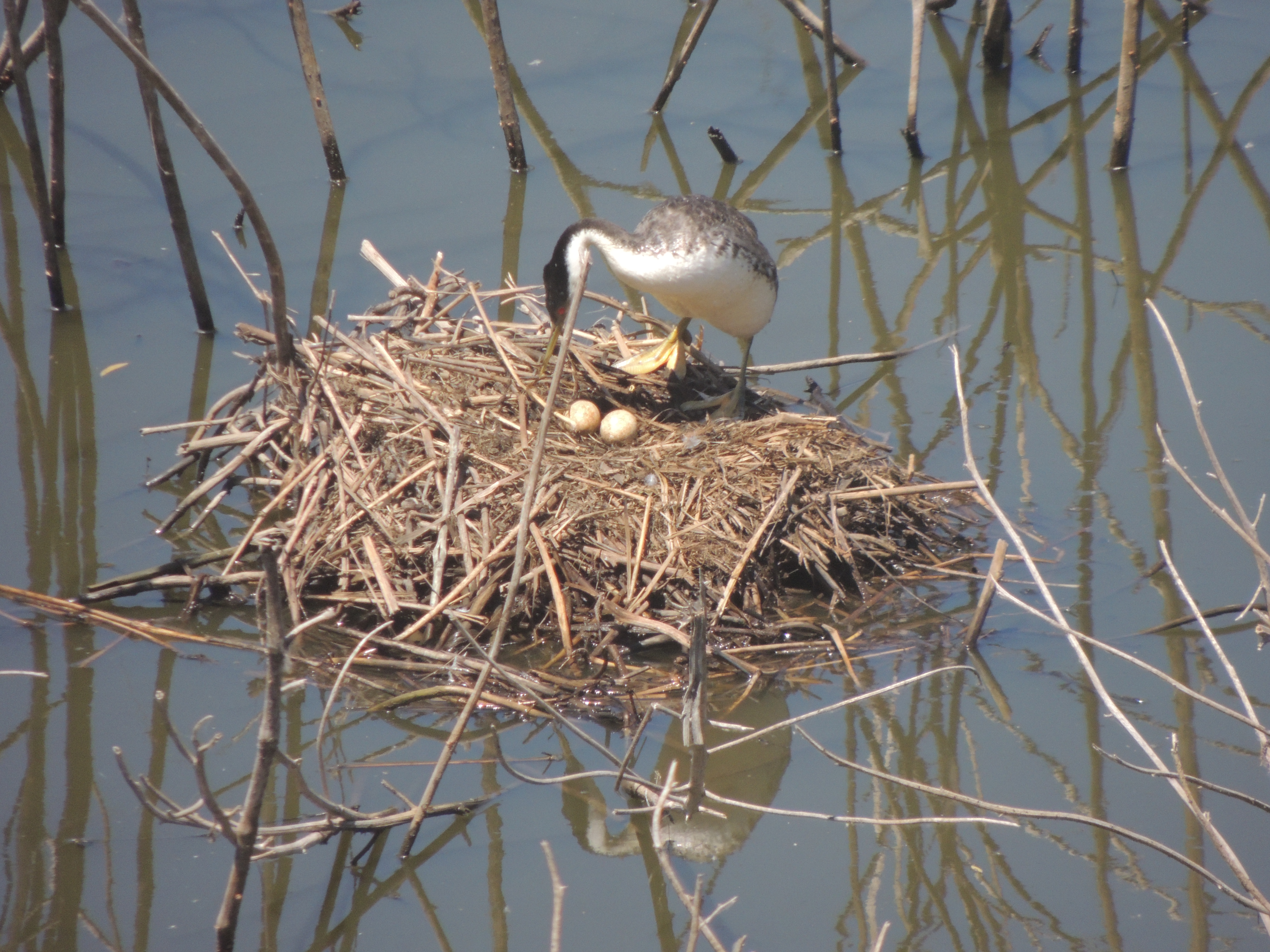
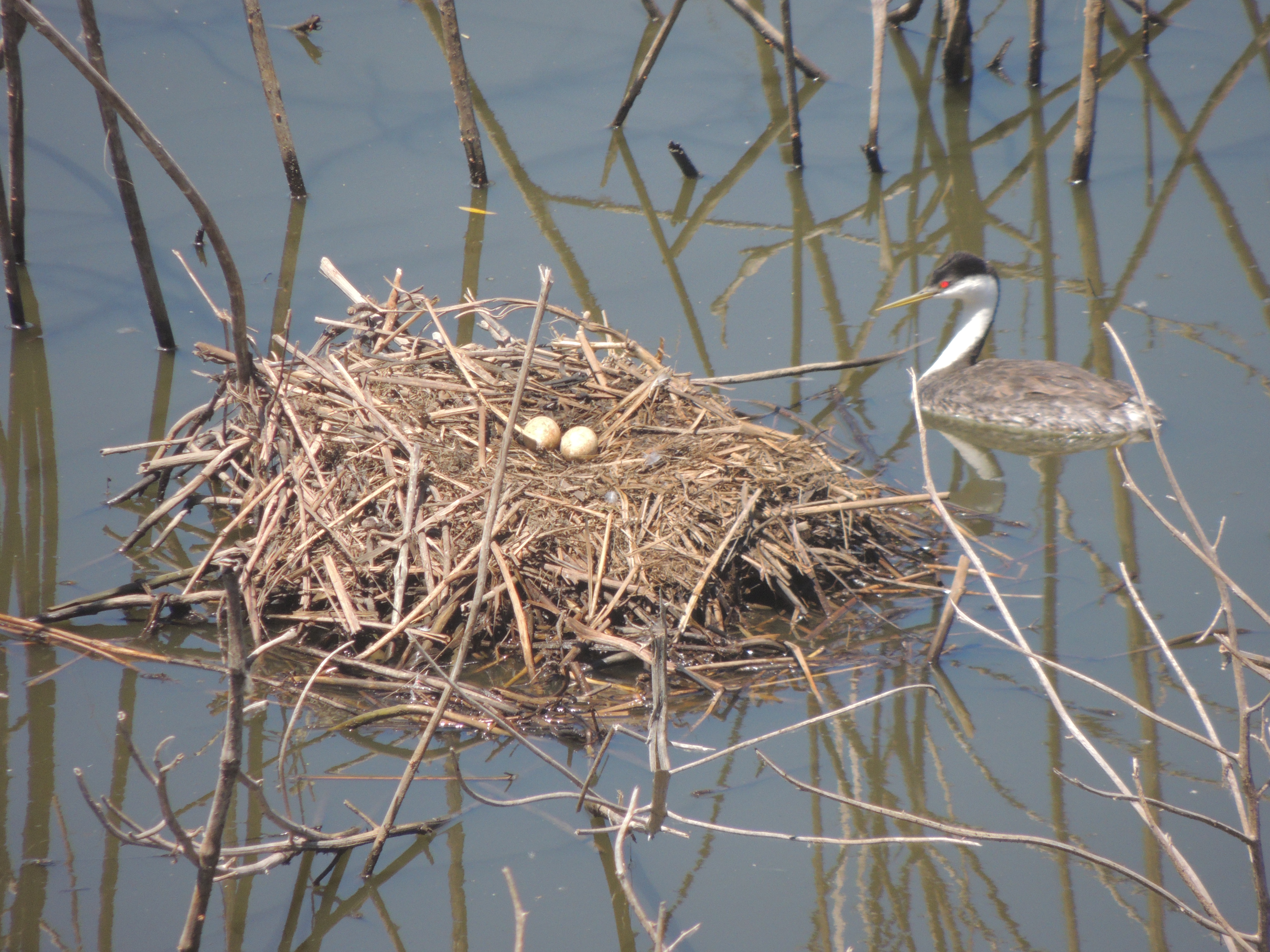
Grebes build large nests at water level on the sticks and branches that are protruding from the water. It is quite a sight to see. In-between the sticks there are lots of nesting birds. My son and I were lucky enough to see one of the birds take a break from the nest and go for a swim, exposing a couple of yellow eggs. Of course the mommy did not go far from the nest and kept swimming close to check on the eggs.

It is an easy walk from the gravel parking lot to the Pedestrian Suspension Bridge where you can view the Grebes nesting. Once on the bridge just look west (away from the freeway) and you will see the nests. I highly recommended that you bring binoculars to view the birds. You can also see them by zooming in with your camera. Without binoculars or a camera you will not be able to see the birds in detail. Also, be sure to bring water. Even though it is a short walk, Escondido gets very hot depending on the time of day you are there.

Besides viewing the Grebes, Lake Hodges offers other activities as well. You can bring your mountain bikes or hike on the many trails around the lake. If you walk to the end of the bridge and turn left, there is a nice hike to a stream and then back around past the lake. A drive to the other side of the lake would also allow you to rent kayaks, which my family and I did one year.

To get to the Pedestrian Suspension Bridge to view the Grebes, take exit 26 W. Bernardo Drive/Pomerado Road off I-15 in San Diego, CA. Head left (West), pass the bridge, and park in the gravel lot on your right off West Bernardo Drive. There is a pathed bike/walking path from the lot to the bridge.

Bringing Birds to your Garden

gardening

Birds are quite interesting and each have a personality all their own. Besides their personalities, their looks are also quite unique. Bringing different types of bird to your garden can bring one much happiness and entertainment.

How then do you get these birds to come to your garden and actually want to hang around for a while? The answer is quite simple really. Give them what they desire and they will come.

In my garden, I have a standard birdfeeder as well as a whimsical bird sized tire swing filled with sunflower seeds that draw many birds to feed. I also have a bluebird house made especially for bluebirds to build nests in to raise their families. The bluebird house was made and gifted to me by my husband. He made it so that it can be opened and cleaned out after nesting season is over. This is the third season the house has been up and we have had nesters each season. It is always exciting to see the babies pop their heads out of the hole. Also, in our tree I have a small hanging bird bath for the birds to drink fresh water. I like this bird bath a lot as it is easy to remove and clean. Most recently, I have added a finch sock to attract finches to our garden. Hummingbirds are also welcome in our garden not only with a feeder but with flowers that attract them to our yard.

Feeders need to be cleaned regularly to help maintain healthy birds and refilled as needed. The bird baths should be cleaned and filled with fresh water daily. I clean my glass bird bath with baking soda. Bird houses should be cleaned out only when the family is no longer using it for the season.

It is nice to position your bird station near a window where you can sit in a cozy chair with a cup of coffee and relax while watching their activities. Having it near a patio is also nice, especially if you like to photograph the birds. If they feel safe and have what they desire birds will come and enjoy your garden and you can enjoy them as well.

Borrego Springs

Travel
Big-Horned Sheep
The Badlands
Desert Wild Flowers

The small town of Borrego Springs, California is located in the Anza-Borrego Desert State Park. This makes a nice day trip for So Cal residents. There is plenty to see and do in the park.

While driving down into the desert valley below, be sure to be on the lookout for big-horn sheep. I was told there were big-horn sheep in the Anza-Borrego Desert, however, I was beginning to question this as I had never seen any in all my years of visiting the park. Then, on my latest trip, I decided to really look as we drove down the steep grade and into the desert below. To my delight, I spotted not one but two big-horn sheep blending in with the rocks on the side of the mountain. I shouted “sheep” and my husband pulled over and we all got out and watched the sheep and took pictures. Then we were even more surprised to see that there were actually four sheep grazing on the mountainside. This indeed was our coolest trip ever to Borrego Springs.

In Borrego, there is a visitor center with trails and a small town with some shops and restaurants. There is also The Art Institute that exhibits artwork that you can purchase. The Art Institute always puts on a nice exhibit. If you are an artist, you can have your work exhibited there if selected in one of their artist calls. We like to bring a lunch and eat at the picnic tables at the round-a-bout in the center of the town. On occasion, there are craft festivals and such at the round-a-bout park.

A trip to the desert wouldn’t be complete without a hike. There are many places to hike in the dessert. Check out the park’s website to find one that suits your needs. I also, recommend visiting the Borregeo Badlands. This section of the desert will make you feel tiny and is amazing to see. The formations were created by water of which they were submerged a long time ago.

Spring is a wonderful time of year to visit the desert, especially if it has been a rainy season. Rain brings wildflowers to the desert. This year the wildflowers were at their best. Yellow and purple carpets of flowers sprinkled over the desert for all to enjoy. Even if the flowers are not in bloom, the desert is amazing and beautiful at any season.

Tips for a pleasant trip to Borrego Springs…Pack plenty of water. Remember it is a desert and while the town itself is small, the desert is quite large, so you don’t want to be caught without enough water. Pack a lunch or snacks. Don’t forget the sunscreen, sunglasses, and a hat. If you plan to hike, wear hiking boots. Binoculars could come in handy if you are a bird watcher or want to see animals such as the big-horn sheep. Remember, animals blend in with their surroundings. A big-horn sheep could be out there, you just have to find it. Borrego Springs is close to The Salton Sea. (See my previous blog.) Start early and see a bit of both or make a weekend of it.

The Salton Sea

Travel

Planning a day trip in Southern California? The Salton Sea may be a destination to consider if you enjoy photography, bananas, and don’t mind the smell of rotting fish.

Actually, I rather enjoyed my trip to the Salton Sea, which was a resort town in the 50’s but was basically deserted because of the condition of the sea. I was skeptical considering what I had read about walking on fish bones and the polluted water. However, I really enjoyed the sea, which was quite beautiful. It was sort of like a treasure hunt. What would be found at the next location? The run down, deserted graffiti filled buildings, the skeleton of a ship, a lounge chair, fish bones, birds nesting in trees in the water….. I did not run out of subjects for my photographs.

Another surprise was the International Banana Museum. Apparently, they are in the Guiness Book of World Records. It is a tiny little building loaded with banana memoribilla. My kids enjoyed it and as I collect banana stickers, I found it amusing. They do make and sell banana drinks there as well.

A bit of advice if you are planning to go…there are not a lot of places to eat so you may want to pack a lunch. There are picnic tables at the Yaht Club that made for a nice place to stop and look around as well as have lunch. Go with an open mind and you will return with a new appreciation for a place abandoned by many.

Happiness is Contagious

life

I googled the definition of contagious… “of an emotion, feeling, or attitude–likely to spread to and affect others”. This is so true of people and their moods. So if you have to be contagious, why not be the happy kind?

Speaking of happy…I was so happy this morning to find that I had actual followers for my new blog and likes as well! I hope the happiness you brought me was contagious to those around me. It definitely set the tone for a good day.

Here are some things that I think spread happiness: emojis, Minions, rainbows, a beautiful spring day, puppies, the beach at sunset, hugs, smiles…

Each day try to find a little and give a little happiness. Remember…it’s contagious.

Getting Rid of Pesky Weeds

gardening

While rains are a welcome sight, the weeds they help produce are not. The question is, how to rid your yard of those pesky weeds without pouring unwanted toxins into the soil?

There are a few solutions. For large areas, the weed whacker can trim them away. However, this method does not get to the root of the matter. To do this the tried and trusted hoe must be used to dig up the soil and the roots. Then a good raking to take up the weeds will leave a nice clean yard.

Weeds growing in cracks or in areas with stone or mulch can be sprayed using a spray bottle filled with vinegar. Vinegar can be bought in one gallon jugs in any grocery store. Another item from the grocery store that can be used is table salt. Table salt (about 8 ounces) put into a spray bottle and filled with water can also be applied to the weeds. Just be careful not to get the vinegar or the salt solution close to plants you want to keep as it will kill or damage them as well.

For some weeds (you know the ones) it is just easier to put on the garden gloves and pull them out by the roots. This is especially true of the tall weeds that you should have pulled a few weeks ago.

When you get to the point where your weeds are under control, it will be just about time for another good rain to bring on another round. Don’t let this discourage you. Put your garden gloves on, grab your spray bottle, and get back in the ring.

Lavender

gardening

Ah the sight of lavender fields! Brings one to think of lazy days touring Provence, France. The fresh scent of lavender can put one at ease. Wouldn’t this be lovely in your own back yard? That is exactly what I thought.

Shopping with my daughter, I came across bunches of dried lavender. “Wouldn’t this be nice,” I thought. Then I looked at the price tag. Maybe not today. After pondering the expense of buying dried lavender, I decided it would be more cost efficient to plant and dry my own lavender and that is what I did.

Lavender is extremely easy to grow here in California. It does not need a lot of water and is not picky about the soil except that it should be well draining.

The lavender can be cut and hung upside down to dry and then used around the house. Once cut, it does not take long for the lavender to bloom again. It is best to harvest lavender early in the morning or late in the afternoon when the bees, which love the lavender, are not busy at work.

I decided to dry lavender to be put in a ceramic wall pocket. I may also try making some dried lavender satchels to put in my drawers. It looks as though I will have enough lavender for myself and to share with others as well and my plants are only a year and not fully grown. Au Revoir!

Growing Pineapples

gardening

I love Hawaii and the taste of fresh island pineapple. What could be better than to have the taste of the islands in your own yard? A few years ago, I decided to give it a try.

I purchased a pineapple from the store, twisted off the top and peeled off a few layers of the lower leaves. I placed this in a glass of water, changing the water daily. After roots started to form, I planted it in a pot with topsoil. It is a good idea to put a wire cage around the plant until it is a good size. This is experience talking. One day I came home and found that an animal (most likely a rabbit) had uprooted a newly planted shoot. Lesson learned. Animals do not bother the plants when they are larger, probably because the leaves do tend to be sharp.

Pineapple plants do not have very long roots, so the pot does not have to be all that deep. The plants do, however, get fairly large. I had to re-pot my plants in larger pots as they grew. They also do not need to be over-watered, although they do require a bit more water when flowering to support the fruit they are producing.

I have found that my plants grow better when not in full sun. I have mine on the side of my house so that they are in the shade until afternoon. This seems to make them happy. They also do not like frost. I live in California and in the winter I am sure to watch the weather forecast. On cold nights I cover the plants with a light frost cover from the garden store. It is very light weight and does not bend the leaves. My plants have been burned from the frost on nights when I didn’t foresee the frost. They survived and still produced pineapples. I just cut off the burnt part of the leaves with scissors.

Pineapple plants produce one pineapple and then they produce shoots that are new plants. When a shoot forms, it can be twisted off and planted as a new plant which will in turn produce a pineapple and then more shoots. A few years ago I stared with one pineapple top and now I have six. All of my plants are offspring from the first plant. The first plant takes the longest to grow and to produce a pineapple. The shoots seem to grow faster and produce pineapples in less time than the original top.

I am sure there are different ways of growing pineapples, however, this is what has worked for me. Not only are the pineapples tasty to eat, they are fun to grow and make for an attractive addition to the landscape. Aloha!